Before a new building goes up in the Melbourne CBD, engineers have already stress-tested it hundreds of times. Different wind loads, different material configurations, different failure scenarios. None of it happened in the real world. All of it informed the real-world decisions.
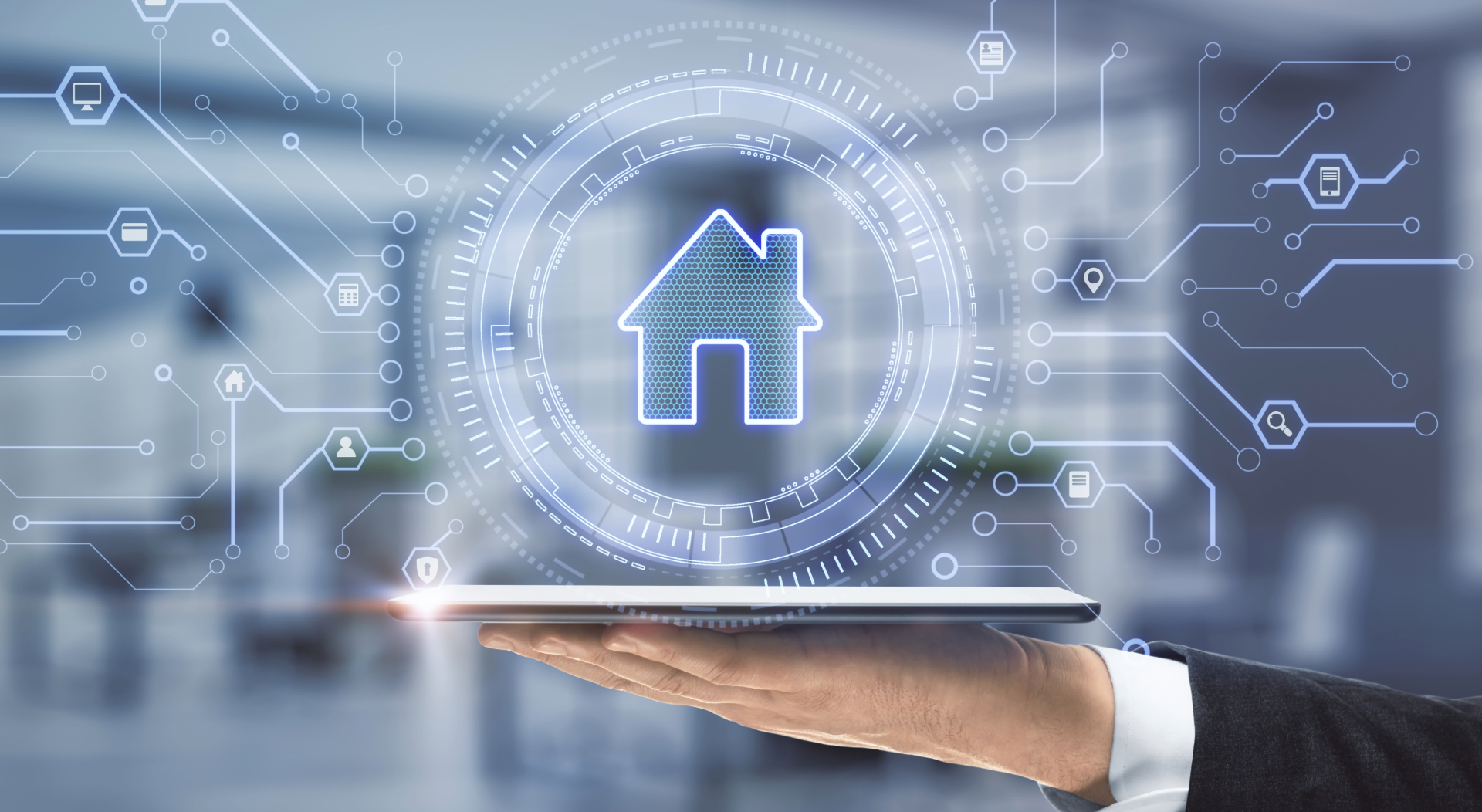
That’s the idea behind a digital twin. A virtual replica of a physical asset, system, or process, connected to live data, updated in real time, and built specifically so you can experiment without consequences.
It sounds like science fiction until you realise it’s already powering some of the most competitive companies on the planet.
What a Digital Twin Actually Is
A digital twin is a virtual replica of a physical asset, system, or process. It stays connected to the real world through sensors and live data, which means it updates continuously as conditions change. You’re not looking at a 3D model that just sits there looking impressive. You’re watching a dynamic, living version of the thing itself.
The concept isn’t new. NASA used early versions of it to simulate spacecraft systems from Earth during the Apollo program, and manufacturing companies ran with it for decades after that. For a long time it was mostly a heavy-industry tool — the kind of thing Boeing or Siemens used, not something that made headlines outside engineering circles.
That’s changed. Cheaper IoT sensors, faster cloud infrastructure, and genuinely useful AI have made digital twins quicker to build, easier to keep updated, and applicable to a much wider range of industries than a factory floor.
How Formula 1 Teams Use Digital Twins
One of the clearest examples of digital twins accelerating innovation comes from motorsport. F1 teams create digital twins of components like tyres and brakes, simulating performance thresholds before the car ever hits the track. Every stress condition, every temperature range, every load scenario gets run in the virtual model first.
This matters because physical testing in F1 is expensive, heavily regulated, and limited in scope. The digital twin effectively gives engineers unlimited test sessions. You can blow up a virtual tyre a thousand times trying different compounds and configurations, then arrive at the race weekend with a much narrower set of options you already know work.
It’s not just motorsport. Smart manufacturers are embedding sensors across factory floors to dynamically simulate production and find efficiencies they’d never have spotted otherwise. Organisations using digital twins are reporting productivity gains of 30% to 60%, reductions in material waste of around 20%, and roughly half the usual time to market. Those aren’t small numbers.
Why Digital Twins Speed Up Innovation
The core reason is straightforward: they remove the cost and risk of physical experimentation.
Normally, testing a new process or product configuration means building something, running it, measuring what happens, then iterating. That’s slow and expensive, especially at industrial scale. With a digital twin, you run the experiment in software first. You test fifty different configurations before the first physical prototype exists. You find failure points before they cause real damage.
Wharton research from early 2026 put it well: in manufacturing and supply chains facing “unprecedented uncertainty,” digital twins are delivering value through rapid response, real-time learning, and improved multi-scenario planning. More scenarios, faster, at lower cost. That’s the innovation engine.
Digital Twins in Healthcare
Healthcare is an interesting case because the stakes of physical experimentation are pretty self-evident. You can’t exactly trial a new hospital staffing model on real patients and just see what happens.
Healthcare executives are paying attention: 66% expect investment in digital twins to grow over the next three years. Hospital operators are already using virtual replicas to model bed availability, staffing schedules, and operating room management. One study found that digital twin-assisted coordination reduced treatment time for stroke patients, which is genuinely meaningful in a field where minutes matter.
Drug development is another obvious use case. Pharmaceutical companies are using digital twins to simulate how patients might respond to new medications before human trials begin. It doesn’t replace clinical trials, but it can dramatically shorten the path to the trials actually worth running.
The AI and IoT Angle
Digital twins don’t work in isolation. They run on two things: live data from IoT sensors, and AI making sense of that data faster than any human team could.
The AI part is what takes a digital twin from a monitoring tool to something that actually drives decisions. Predictive models catch early signs of equipment failure. Generative models simulate future states and design options that engineers might not have thought to test. By 2026, the most advanced twins aren’t static at all. They update continuously, learn from new data, and can flag issues or opportunities on their own.
Nokia’s RAN Digital Twin, built on NVIDIA’s Omniverse platform, is a decent example of where this is heading in telecoms. It lets engineers simulate radio propagation in dense urban environments and test beamforming configurations that would be impractical to trial physically. Faster network optimisation without the cost of real-world trial and error.
The Market Is Growing Fast for a Reason
This isn’t speculative adoption. The global digital twin market is projected to reach $74 billion by 2027, driven by the proliferation of IoT infrastructure and the falling cost of building and maintaining virtual models.
Governments are funding it, too. The EU’s Horizon Europe program allocated €250 million for digital twin projects targeting energy and manufacturing. The US National AI Research Resource Task Force put $300 million toward digital simulation and AI R&D through 2026. That kind of public money doesn’t get committed when a technology is still a science project.
What Digital Twins Won’t Do
A digital twin is only as good as the data feeding it. If your sensors are low quality or your physical and virtual systems drift apart, you end up making confident decisions based on a model that no longer reflects reality. That’s arguably worse than acknowledged uncertainty.
There’s also the build cost. Creating a high-fidelity twin of a complex system requires real upfront investment in data infrastructure, sensor networks, and modelling expertise. The barrier is falling as platforms mature, but it’s still a barrier.
And then there’s the cultural piece, which almost never appears in market projections but almost always shows up in implementation. Getting engineers, operations teams, and executives to actually trust a virtual model enough to act on its recommendations takes time. The technology frequently outpaces the organisational readiness to use it well.
Why This Matters Beyond the Factory Floor
The interesting shift happening right now is that digital twins are moving well outside their traditional industrial home. Supply chains, hospitals, city infrastructure, retail environments, even individual buildings. Bentley Systems has built digital twins at both ends of the scale spectrum, from a single historic structure like Saint Peter’s Basilica to an entire city.
That expansion makes sense when you think about it. The underlying problem digital twins solve — testing ideas in a low-risk virtual environment before committing in the physical world — isn’t specific to manufacturing. It applies anywhere that iteration is expensive, dangerous, or just painfully slow.
For companies serious about innovating faster, the question isn’t really whether digital twins are relevant to their industry. It’s whether they’re building the data infrastructure today that will make those twins useful tomorrow.